A methodical at look at the great Fall harvest appointed times of God Almighty: Sukkot and Shemini Atzeret.
Sukkot has the greatest harvest symbolism, but I’ll talk about Yom Kippur first. It’s more serious for the Jews, and it triggered an interesting study on whether or not 2026 could be a Jubilee year. The study got a bit long for this post so I moved it here: Yom Kippur Trumpet and is 2026 a Jubilee year? https://alephtav.blog/is-2026-a-jubilee-year/ The conclusion was yes there’s ample support for the Fall of 2026 to be the start of a Jubilee Year!
Yom Teruah (Trumpets) and Yom Kippur are attached as the Yom Teruah trumpets set off what’s called the 10 Days of Awe, the preparation for the Day of Atonement (Yom Kippur). That’s what the trumpets do – they point to things, that will happen soon. That will hopefully including the spectacular harvest of the bride of Christ this year-2026AD. The Ten Days of Awe are dedicated to introspection, repentance, and seeking forgiveness from others, as well as from God. After that, the five days until Sukkot are the transition when after having been forgiven for one more year, they begin to recover from their very deep and serious soul searching and begin to focus on the greatest harvest of the year; Then the entire nation gathers outside for 7+1 days (the extra day is mysterious but is said to be for lingering in joy) in huts -multitudes of home made huts -as they all feast under the stars knowing that they are reconciled with God, and in that way they are tabernacling with God.
1.26.7 DOOR, Glory of God
Watchers are always trying to understand what exactly God meant by the last trumpet! Although the next section examines the ‘+1’ day of Sukkot (Shemini Atzeret) for the last trumpet of the year, and we found out that Torah did indeed prescribe the final trumpet of the holy year to be blown then, over a sacrifice; The Jews won’t start making sacrifices again until the 3rd temple’s built. Since the temple in heaven is still there and since the earthly temple was merely a reflection if it, we may wonder if the angels still blast a trumpet on that day to keep time for the missing sacrifices. Could the gathering of the saints – each one of which had died to their own will in order to live for God’s will, be considered as a sacrificial offering? When Jesus brought the 24 elders, who He released from captivity in Hades, up to to His Father God Almighty in heaven as the First Fruits of the Barley Harvest of Saints, it was considered to be an essential offering to God. In Leviticus 23:36, no specific time for the sacrificial offering is mentioned so conceivably, Jesus could rapture His bride at the very end of its 8th day meaning that its trumpet blow would also be saved to the end and would be the ‘trump of God’.
FROM THE PROCLAMATION OF LIBERTY TO THE DAY OF RELEASE – A 2025 – 2026 WATCH TIMELINE https://www.youtube.com/watch?v=rAda14T61HM
As described in pretty good detail at the bottom of this post, Sukkot/Feast of Tabernacles is the greatest harvest feast. It spans 8 days (7 + 1). Jesus Christ may harvest His bride on Shemini Atzeret, the +1 day, also called the the 8th day.
1.26.8 DOOR, Glory of God
There are two possibilities. If 2026 ADT was delayed a month because it followed a leap year on the Torah calendar Or, (in very rare cases and under special conditions, a leap year can even delay the second year after it. )the following date calculations will be a month early!
My September-early October high watch calendar:
https://alephtav.blog/october-reckoning-2026/
The October high watches for Jesus Christ on the calendar:
Using the Gregorian calendar (AD) along with the Torah day structure (ADT) –days starting at sunset:
https://phasesmoon.com/mooncalendar2026October.htm
*** https://www.timeofsunrise.com/jerusalem/november
If 2026 followed a leap year on God’s Torah calendar . . .
The October moon sliver will most likely be seen either in the evening of Sunday Oct. 11th (1.96% sliver) or more likely Monday Oct. 12th (5.71% sliver) so . . .
Yom Teruah could be Sun. Oct. 11 – Mon. Oct. 12: 18:13 Oct. 11 Jerusalem sunset (12:13 PM Oct.11 NY DST) 6:41 AM Oct. 12 Jerusalem sunrise (12:41 AM Oct. 12 NY DST, ) 18:12 Oct.12 Jerusalem twilight (12:12 PM Oct. 12 NY DST) or Mon. Oct. 12 – Tue. Oct. 13: 18:12 Oct. 12 Jerusalem sunset (12:12 PM Oct.12 NY DST) 6:41 AM Oct. 13 Jerusalem sunrise (12:41 AM by NY DST, Oct.13) 18:11 Oct.13 Jerusalem twilight (12:11 PM Oct. 13 NY DST)
Yom Kippur could be Mon. Oct. 19 – Tues. Oct. 20: 18:04 Oct. 19 Jerusalem sunset (12:04 PM Oct.19 NY DST) 6:46AM Jerusalem sunrise (12:46 AM Oct.20 NY DST) 18:03 Oct.20 Jerusalem twilight (12:03 PM Oct.20 NY DST) or Tue. Oct. 20 – Wed. Oct 21: 18:03 Oct. 20 Jerusalem sunset (12:03 PM Oct. 20 NY DST) 6:47 AM Oct. 21 Jerusalem sunrise (12:47 AM Oct. 21 NY DST) 18:02 Oct.21 Jerusalem twilight (12:03 PM Oct.21 NY DST)
A Trumpet will be blown from heaven at sunset if it's the start of the final Jubilee Year
That doesn’t necessarily mean it’s the rapture day, it means that the Jubilee Year in which the rapture will occur has begun! The last trumpet of the season and of the Sabbatical year is the 8th day of Sukkot (7+1), but the symbolism shows that that part might not be fulfilled until the second coming see below
Sukkot 1st day: Oct. 24-25 or 25-26—to—Sukkot 7th day: 30-31 or 31-Nov. 1
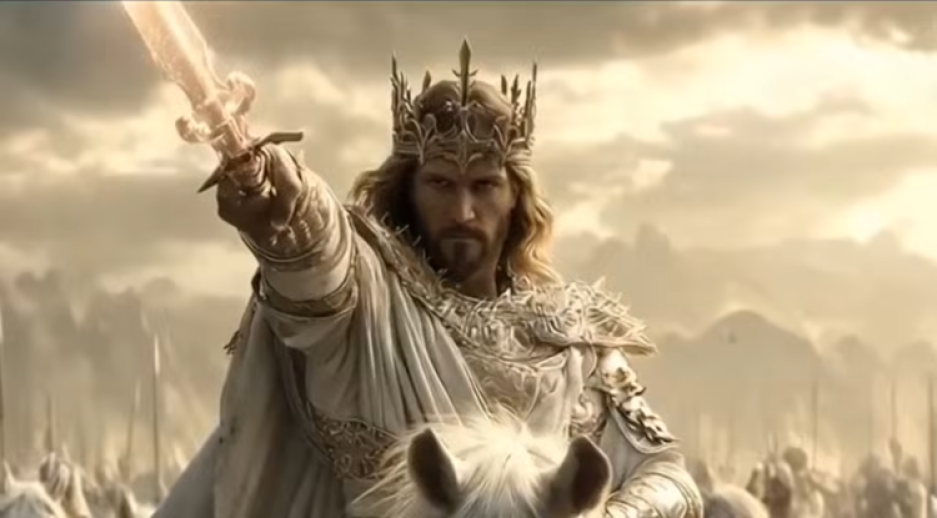
The first day of Sukkot was a very high watch day; The second to the last trumpet of the holy year was commanded to be blown over the sacrifice. If the saints of the bride of Christ is considered to be the sacrifice, this appointed time would make sense. The saints have died to their own will in order to live for the will of Jesus Christ, and are ready to leave their mortal bodies and this world behind, which can also be seen as part of the sacrifice. Time will move differently for the saints while they’re in God’s third heaven as compared to time as experienced by the people remaining on Earth. According to the will of Father God, it‘s likely that the saints will spend 7 years in heaven, modeled after the 7 days in Jewish weddings when the newly betrothed get to know each other intimately. But it doesn’t have to also be 7 years on Earth from the time that Jesus Christ raptures His bride until He returns to Earth to stay as King of Kings because Father God said He’d cut the days of His wrath short otherwise no flesh would survive. In my opinion, no matter upon which day it starts, the 7 yrs. the bride will spend in heaven will consummate at the last day of the end of this current age on Earth; That’ll be the day of Jesus Christ’s glorious second coming. He’ll be riding His heavenly white horse with His beautiful nation of saints that He purchased with His blood. They’ll be following Him also on white horses; That’s the whole body of His saints and they’ll be surrounded by myriads upon myriads of angels as far as the eye can see.
If that turns out not to be the rapture day, Shemini Atzeret has the literal last trumpet of the year:
IS THIS THE LAST DAY SPOKEN OF BY JESUS? https://www.youtube.com/watch?v=SNW-Zbk5iNs
But before we look at the exact dates and times for Shemini Atzeret, there is one more intervening high watch day. It’s October 28 and in case I don’t have time to write about it here’s a good video: Morning Star 2026: A Sign of Jesus’ Soon Coming https://www.youtube.com/watch?v=5VQWYDB09vQ
Shemini Atzeret could be Sat. Oct. 31 – Sun. Nov. 1: 16:52 Oct. 31 Jerusalem sunset (12:52 PM Oct. 31, NY DST ) 5:56 AM Nov. 1 sunrise Jerusalem (11:56 PM Oct. 31, NY DST) 16:51 Jerusalem twilight Nov.1 (11:51 AM Nov. 1 in NY) or Sun. Nov. 1 – Mon. Nov. 2: 16:51 Jerusalem sunset (11:51 AM Nov. 1 in NY) 5:57 AM sunrise Jerusalem (10:57 PM Nov. 1 in NY ) 16:50 Jerusalem twilight Nov.2 (11:50 AM Nov. 2 in NY)
God prescribed a trumpet to be blown over a sacrifice on Shemini Atzeret, which is the literal last appointed trumpet blow of God’s yearly appointed times. But, without animal sacrifices happening in Jerusalem now, just as in the explanation above I gave for day 1 of Sukkot, I think the bride herself could be the sacrifice in the sense that all saints who make up Christ’s bride have already died to themselves, their own will and have come to live only for Jesus Christ. Christ’s bride is eager and waiting to divorce this world as it currently exists; And the saints also welcome the rapid transformation of their sinful dying flesh bodies, so in a way we could say that the saints sacrifice their bodies as well. As believers the saints know that the flesh body must die in order for it to become an immortal glorified body, one without sin nature.
Since the seven Sukkot proper days will have passed by Shemini Atzeret, we can consider those seven days as analogous to the seven days that the door of Noah’s ark stayed open before the gates of the deep broke. (Genesis 7:4, 7:11)
Below is just a research clarification, since there’s a lot of misinformation out there:
Are trumpets blown over all 8 days of Sukkot Torah sacrifices? The following answer is from Duck Tech I  :
Trumpet Blasts During Sukkot Trumpets are blown during the sacrifices on Sukkot, but not specifically on all eight days. The first day of Sukkot and Shemini Atzeret (the eighth day) are particularly noted for trumpet blasts during the offerings. Overview of Sukkot Sukkot, also known as the Feast of Tabernacles, is a seven-day Jewish holiday that begins on the 15th of Tishrei. It is a time of celebration and remembrance of the Israelites’ journey in the wilderness. Conclusion In summary, trumpet blasts are significant during the first day of Sukkot and on Shemini Atzeret, but they are not part of the sacrificial rituals for the intervening days.
What time of day would the sacrifices have been properly done on the 8th day of gathering, Shemini Atzeret, if there was a temple with active Mosaic Law being practiced? The following answer is from Duck Tech I :
Sacrifices on Shemini Atzeret The sacrifices on the 8th day of Sukkot, known as Shemini Atzeret, are to be offered during the day, but the specific time is not clearly defined in the scriptures. Traditionally, it is understood that they would occur in the morning, similar to other sacrificial offerings in the Temple. Traditional Understanding Morning Offerings: It is commonly understood that the sacrifices would occur in the morning, similar to other sacrificial offerings in the Temple. This understanding aligns with the general practices observed during other sacrificial offerings in the Jewish tradition.
You must be logged in to post a comment.